What Are Golden Teacher Mushrooms and What Does Science Know About Them
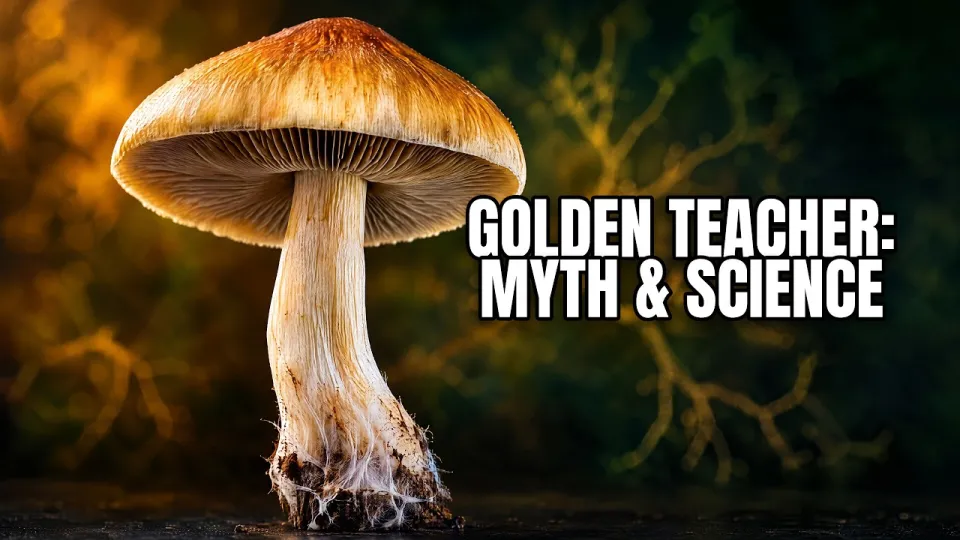
Video: Golden Teacher Mushrooms: Myth, Chemistry & What Science Knows
· based on the channel Shroomverse
Understanding What Golden Teacher Mushrooms Are
Golden Teacher mushrooms are a popular name for a psilocybin-containing psychedelic mushroom commonly cultivated and used for their psychoactive effects. The term "Golden Teacher" is a community label rather than a formal taxonomic classification, referring usually to a particular strain of Psilocybe cubensis characterized by golden caps and reputedly introspective, insightful experiences. Despite their popularity, the exact biological lineage and origins of the label remain uncertain.
Origins and Taxonomy of the Golden Teacher Label
The name "Golden Teacher" does not correspond to a distinct species but is instead a cultivated variety within the Psilocybe cubensis species. The label emerged from mycology and psychedelic communities, reflecting cultural rather than scientific taxonomy. As a result, different growers and regions may produce mushrooms labeled "Golden Teacher" with genetic and chemical variations. This means the name conveys more about community identity and expected effects than strict biological classification.
Chemistry and Psychoactive Components
Golden Teacher mushrooms primarily owe their psychoactive properties to psilocybin and its active metabolite psilocin. These compounds bind to serotonin receptors in the brain, especially the 5-HT2A receptor, altering perception, cognition, and mood. Chemical analyses have shown variation in psilocybin and psilocin concentrations among samples labeled as Golden Teacher, reflecting cultivation conditions and genetic differences. The characteristic blue bruising seen when handling these mushrooms results from psilocin oxidation but does not reliably indicate potency or concentration.
What Brain Imaging and Clinical Research Reveal
Scientific studies using brain imaging techniques, such as fMRI, have demonstrated that psilocybin reduces activity within the brain's default mode network (DMN), a network associated with the sense of self and ego. This reduction corresponds to experiences of ego dissolution and altered consciousness commonly reported with psychedelic use. However, clinical trials typically use standardized synthetic psilocybin doses rather than whole mushrooms, and effects can differ based on psychological support and context. No robust evidence currently proves that Golden Teacher mushrooms produce distinct effects compared to other psilocybin mushrooms.
Myths, Cultural Expectations, and Realities
Popular culture often attributes special qualities to Golden Teacher mushrooms, including spiritual insights or consistent experiential effects. However, scientific evidence emphasizes that individual experiences vary widely due to biological, environmental, and psychological factors. The label "Golden Teacher" may influence expectations through cultural narratives, but standardized clinical research focuses on isolated psilocybin molecules. Users should understand that mushroom names do not guarantee specific chemical profiles or experiences.
Summary
Golden Teacher mushrooms are a culturally significant name for a psilocybin mushroom strain known for its golden caps and reputed introspective effects. Scientifically, they belong to the Psilocybe cubensis species with chemical variability across samples. Psilocybin and psilocin are the active compounds affecting brain networks related to self-awareness, but clinical research relies on standardized compounds rather than specific mushroom varieties. The myths surrounding Golden Teacher mushrooms highlight the complex interplay of biology, culture, and expectation. This overview is based on scientific insights and the educational documentary by Shroomverse, which explores these topics in detail.
Key takeaways
- Golden Teacher is a common name, not a formal taxonomy term.
- They are psilocybin-containing psychedelic mushrooms with variable chemistry.
- Blue bruising indicates psilocin oxidation but not potency.
- Brain imaging shows psilocybin affects self-perception networks.
- Clinical trials focus on standardized psilocybin, not specific mushroom strains.
Source: Golden Teacher Mushrooms: Myth, Chemistry & What Science Knows · Markdown version
Questions & answers
What exactly is a Golden Teacher mushroom?
Golden Teacher is a common community name for a cultivated strain of Psilocybe cubensis mushrooms known for their golden caps and psychedelic effects. It is not a formal scientific species name.
Does the blue bruising on Golden Teacher mushrooms indicate higher potency?
No, blue bruising results from the oxidation of psilocin when the mushroom tissue is damaged. It is a sign of the presence of psychoactive compounds but does not reliably indicate potency or strength.
How do Golden Teacher mushrooms affect the brain?
The active compounds psilocybin and psilocin in Golden Teacher mushrooms bind to serotonin receptors, particularly 5-HT2A, altering brain activity. Brain imaging shows decreased default mode network activity, which is linked to changes in self-perception and consciousness.
Are the effects of Golden Teacher mushrooms consistent across all samples?
No, chemical composition and psychoactive effects can vary widely between samples labeled as Golden Teacher due to genetic differences and cultivation methods. Experience also depends on individual psychological and environmental factors.